
Seven Traits of an AI Development Company for Startup and Economic-Development Programmes
Seven practical traits funders, institutions and programme managers should look for when choosing an AI development company for startup and economic-development initiatives.
- Author
- PLUDAB Technology Limited
- Published
- Published
- Last modified
- Updated
Published by PLUDAB Technology Limited, Maiduguri, Borno State, Nigeria.
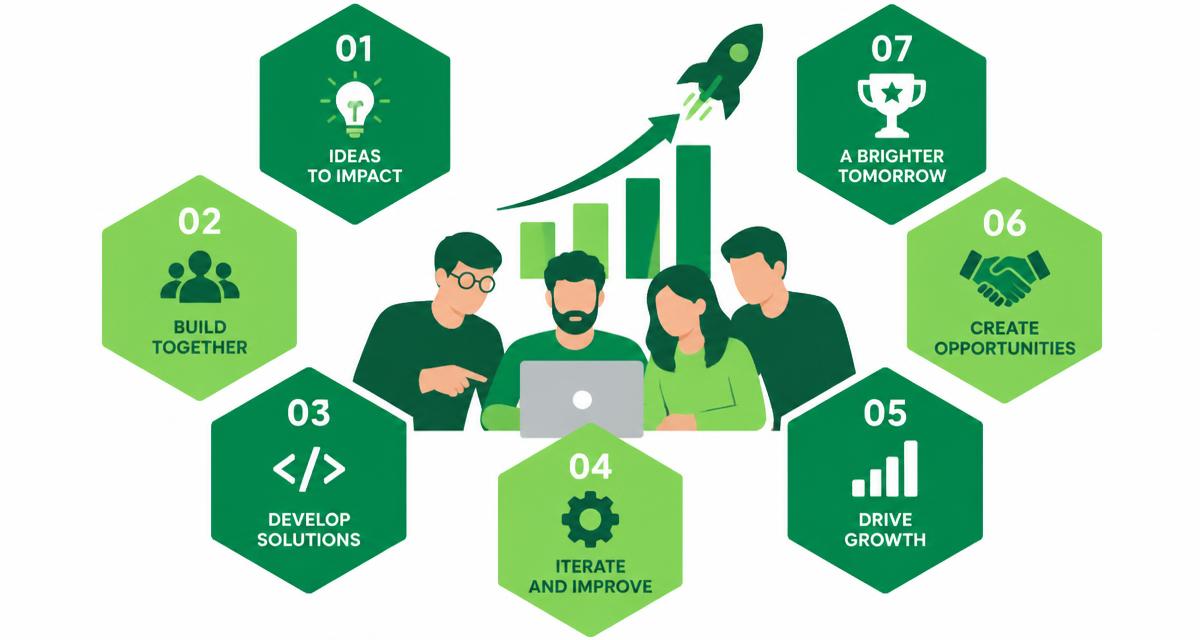
An AI development company serving startup and economic-development programmes must succeed in two environments at once: the technology must work, and the programme must produce credible human and economic outcomes. These seven traits help buyers separate a genuine implementation partner from a company offering impressive demonstrations without a realistic delivery path.
1 Outcome-led discovery
The company asks about programme goals, users, operating constraints and success measures before proposing features. It can translate broad goals such as job creation or business resilience into specific workflows and indicators.
2 Practical technical judgement
The team knows when AI adds value and when a conventional database, rules-based workflow or simple automation is safer and cheaper. It can explain model choices, limitations, integrations, testing and maintenance without hiding behind jargon.
3 Responsible data governance
The company treats privacy, access control, data quality, security and retention as part of product design. It understands that participant and enterprise data can be sensitive and provides documentation that programme managers can review.
4 Inclusive user design
The solution reflects the devices, connectivity, language, literacy and accessibility needs of real participants. The team tests with users and adapts the product when evidence shows friction or exclusion.
5 Measurable delivery
Milestones, acceptance criteria and programme indicators are defined in advance. The company can show progress through working releases, user feedback and reliable metrics — not only status presentations.
6 Capacity transfer
Staff and administrators receive training, documentation and appropriate control of the system. The organisation is not forced into permanent dependence for routine tasks or access to its own information.
7 Sustainable support
The company explains maintenance, hosting, updates, incident response and future costs. It designs a path from pilot to scale and identifies what must change when participant numbers, locations or programme requirements grow.
A simple procurement test
Ask shortlisted companies to respond to the same short scenario. Require a proposed user journey, data requirements, risks, pilot plan, success indicators, support model and total cost assumptions. Score the responses consistently and invite finalists to explain trade-offs. The strongest provider will be clear about both value and limitations.
Work with PLUDAB
PLUDAB Technology Limited helps businesses, schools, NGOs and institutions turn ideas into practical digital solutions. Our services include website development, custom software, database and management systems, school-management solutions and AI-enabled products. To explore a programme technology partnership, contact PLUDAB for a discovery discussion.
Frequently asked questions
- Does every development programme need AI?
- No. AI is useful only when it improves a defined outcome more effectively than a simpler approach.
- What evidence should a provider supply?
- Ask for working demonstrations, delivery references where available, a test plan, measurable milestones and clear limitations.
- What prevents vendor lock-in?
- Clear ownership terms, data exports, documentation, administrator training and an agreed transition process reduce dependency.
Talk to PLUDAB
PLUDAB Technology Limited designs, builds and supports AI-enabled software, databases and management systems for organisations across Nigeria. Learn more about our services, read about our team or start a discovery conversation with us.
Contact PLUDABSources
- Nigeria Data Protection Commission: https://ndpc.gov.ng
- National Information Technology Development Agency: https://nitda.gov.ng
- United Nations Sustainable Development Goals: https://sdgs.un.org
Related articles
How to Choose a Responsible AI Solutions Partner in Nigeria
A practical Nigerian guide for NGOs, schools, businesses and public institutions assessing AI partners for data protection, governance, security and social impact.
Read articleHow to Select AI Companies for Entrepreneurship Programmes in Nigeria
A criteria-led guide for NGOs, accelerators and development agencies choosing AI companies for entrepreneurship, livelihoods and youth programmes in Nigeria.
Read article