
How to Choose a Responsible AI Solutions Partner in Nigeria
A practical Nigerian guide for NGOs, schools, businesses and public institutions assessing AI partners for data protection, governance, security and social impact.
- Author
- PLUDAB Technology Limited
- Published
- Published
- Last modified
- Updated
Published by PLUDAB Technology Limited, Maiduguri, Borno State, Nigeria.
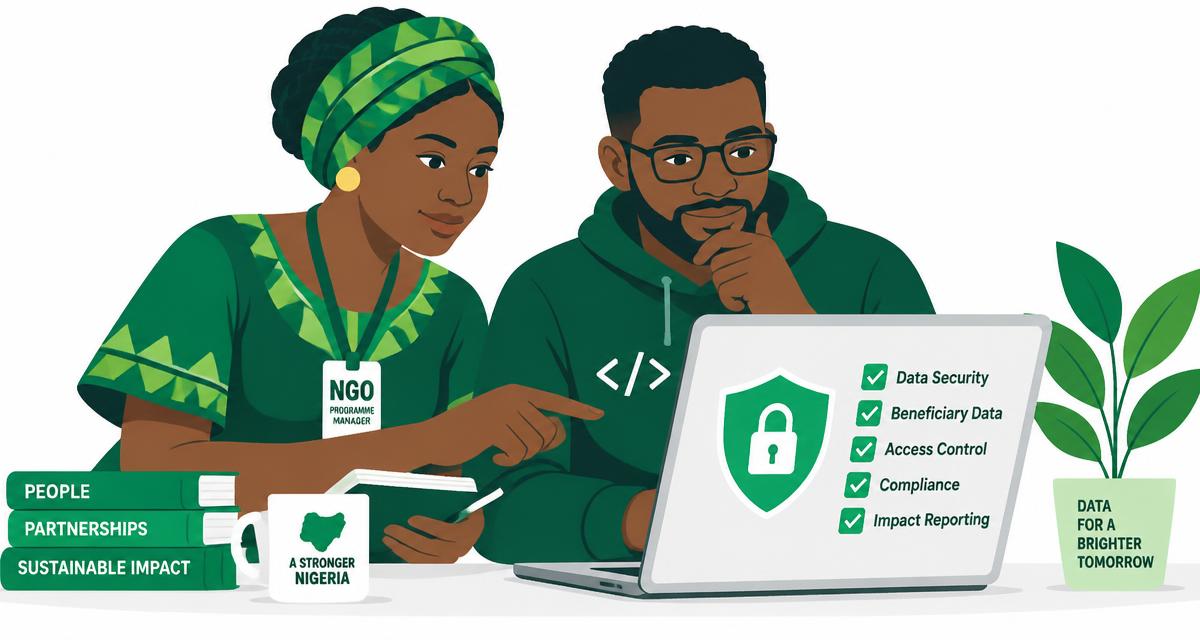
Choosing an AI solutions partner is not only a technical decision. Nigerian organisations must also consider how the provider will protect personal data, explain automated decisions, manage security risks and support the people affected by the system. A responsible partner should be able to connect technical delivery with Nigerian law, operational realities and measurable social value.
1 Start with the real problem
A credible provider should begin by defining the decision, service or workflow that needs improvement. Ask what success will look like, who will use the system, what data is genuinely necessary and what could go wrong. Avoid starting with a fashionable tool and searching for a problem afterward. For an NGO, success may mean faster beneficiary reporting without exposing sensitive identities. For a school, it may mean reducing administrative work while keeping student records secure.
2 Check data-protection readiness
Nigeria's Data Protection Act 2023 provides the national framework for processing personal data. Ask a prospective partner what information will be collected, where it will be stored, who can access it, how long it will be retained and how a person can exercise their data rights. The provider should support data minimisation, appropriate security, clear notices, controlled access and a documented response to incidents. Sensitive beneficiary, health, financial and children's data require especially careful treatment.
3 Demand human oversight and clear explanations
AI should support accountable human decisions, not hide responsibility. Ask which outputs are recommendations, which actions are automated and who can review or reverse an outcome. The partner should explain the system in language that programme teams and affected users can understand. When a model may influence access to a service, grant, job or benefit, escalation and appeal routes should be designed before deployment.
4 Evaluate security and technical reliability
Request a practical security plan covering authentication, role-based access, encryption where appropriate, backups, logging, vulnerability management and software updates. Confirm what happens during internet or power interruptions and whether the solution can operate under local bandwidth constraints. A pilot should include tests for inaccurate outputs, missing data, misuse and system failure — not only a demonstration under ideal conditions.
5 Look for evidence and measurable impact
Ask for a delivery plan with milestones, acceptance criteria and measurable outcomes. Useful indicators may include time saved, error reduction, service reach, user satisfaction, adoption and cost per beneficiary. Responsible providers state the limits of the system and do not promise perfect accuracy. They should also describe how performance will be monitored after launch and how users can report problems.
6 Assess local capacity and long-term ownership
A strong partner should train the organisation's staff, document the system and clarify ownership of data, source code, models and intellectual property. Confirm ongoing support costs and how the organisation can export its data or transition to another provider. Local context matters: language, accessibility, community trust, connectivity, device availability and safeguarding requirements should influence the design.
A practical selection checklist
Before signing, confirm that the provider can give you a written problem definition, data map, privacy and security plan, human-oversight process, pilot plan, measurable success criteria, training plan, maintenance terms and exit arrangements. Compare providers using the same checklist rather than relying on presentations alone.
How PLUDAB approaches responsible AI delivery
PLUDAB Technology Limited works with organisations to translate operational needs into practical digital systems. Our approach begins with discovery, defines data and user responsibilities, tests solutions through controlled pilots and plans for training and support. Organisations can contact PLUDAB to discuss AI-enabled software, database systems, research tools and digital-transformation projects in Nigeria.
Frequently asked questions
- What makes an AI company responsible?
- It combines technical competence with privacy, security, human oversight, transparency, inclusion and ongoing performance monitoring.
- Should an organisation share all its data with an AI provider?
- No. It should share only data that is necessary for the agreed purpose, under clear access, retention and security controls.
- Is a pilot necessary?
- For consequential or unfamiliar systems, a limited pilot helps test usefulness, risks and user acceptance before wider deployment.
Talk to PLUDAB
PLUDAB Technology Limited designs, builds and supports AI-enabled software, databases and management systems for organisations across Nigeria. Learn more about our services, read about our team or start a discovery conversation with us.
Contact PLUDABSources
- Nigeria Data Protection Commission: https://ndpc.gov.ng
- National Information Technology Development Agency: https://nitda.gov.ng
- United Nations Sustainable Development Goals: https://sdgs.un.org
Related articles
How to Select AI Companies for Entrepreneurship Programmes in Nigeria
A criteria-led guide for NGOs, accelerators and development agencies choosing AI companies for entrepreneurship, livelihoods and youth programmes in Nigeria.
Read articleSeven Traits of an AI Development Company for Startup and Economic-Development Programmes
Seven practical traits funders, institutions and programme managers should look for when choosing an AI development company for startup and economic-development initiatives.
Read article